


Capital Gains Tax (CGT) in Kenya is a critical consideration for investors, property owners, and businesses selling assets. Since its reintroduction in 2015, the tax has undergone changes in rates and enforcement. In this blog, we’ll explore how CGT works, its current rate, exemptions, and compliance requirements—along with trends over the years.
What is Capital Gains Tax (CGT)?
CGT is a tax on the profit earned from selling a capital asset, such as:
- Land & buildings
- Shares (unlisted companies)
- Business assets
- Intellectual property
The tax applies only to the gain (profit), not the total sale price.
Current CGT Rate in Kenya
Since 1 January 2022, Kenya’s CGT rate is 15%, up from the previous 5%. This increase aimed to boost government revenue from high-value transactions.
CGT Rate Trend Over the Years
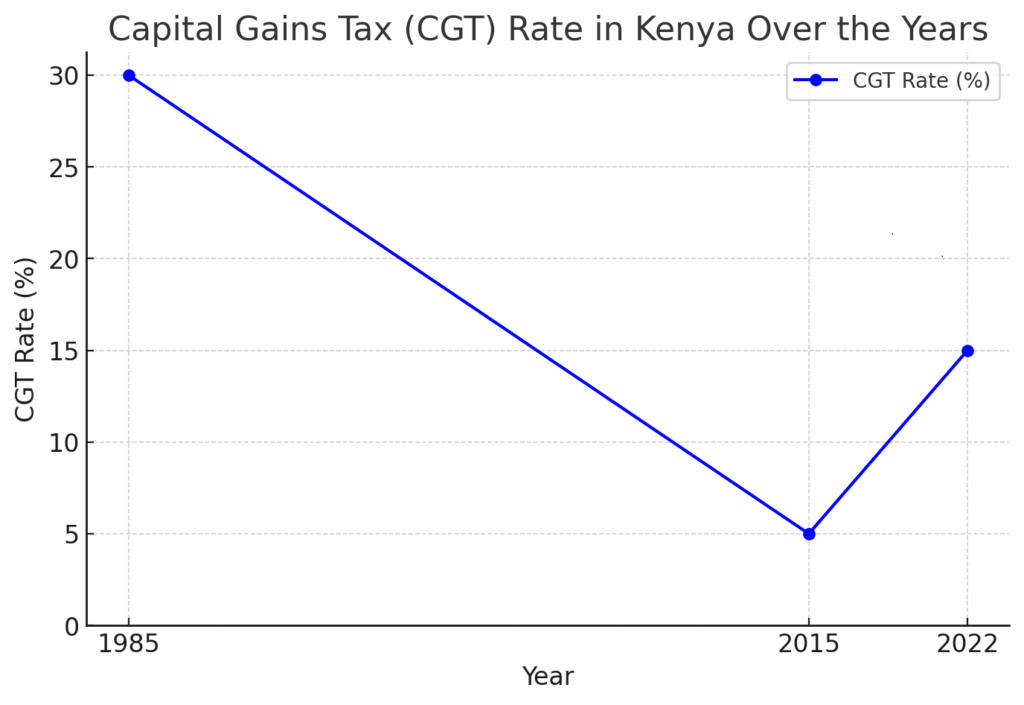
(Graph: A bar chart showing CGT rates rising from 5% to 15% in 2022.)
How is CGT Calculated?
The formula is:
Capital Gain = Selling Price – (Purchase Price + Allowable Expenses)
Example:
- Purchase price of land (2018): KSh 5 million
- Improvements (fencing, legal fees): KSh 1 million
- Selling price (2024): KSh 10 million
- Capital Gain = 10M – (5M + 1M) = KSh 4 million
- CGT (15%) = KSh 600,000
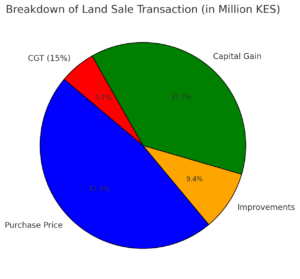
(Graph: A pie chart showing the breakdown—selling price vs. deductible costs vs. taxable gain.)
Key Exemptions from CGT
Not all transactions attract CGT. Exemptions include:
✅ NSE-listed shares (since 1985)
✅ Inheritance or spousal transfers
✅ Compulsory government acquisitions
✅ Corporate restructuring (under certain conditions)
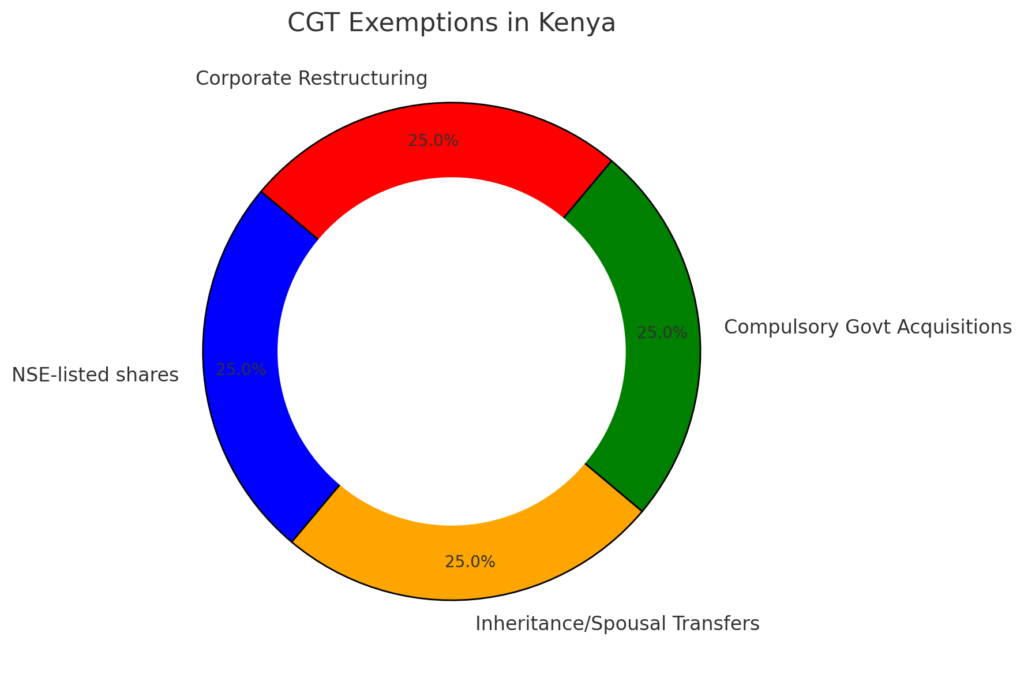
(Graph: A donut chart showing the proportion of exempt vs. taxable transactions.)
Compliance & Withholding Tax Obligations
- For property sales: The buyer must withhold 5% of the sale price and remit it to KRA within 24 hours. The seller later files a return to reconcile the actual CGT due.
- For shares & other assets: The seller must self-declare and pay via iTax by the 20th of the following month.
Penalties for non-compliance: Late filings attract 5%–20% fines plus interest.
Recent Enforcement Trends
KRA has intensified CGT audits, especially in real estate and private equity deals. With digital systems like iTax, tracking transactions has become easier for the taxman.
CGT Revenue Collection (KSh Billion)
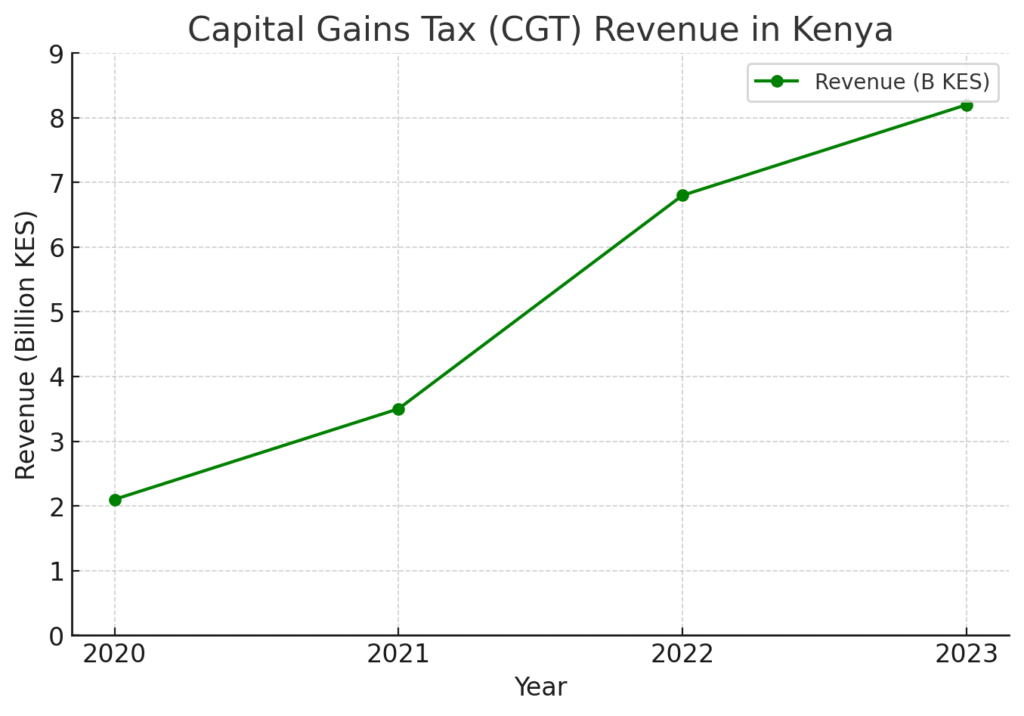
(Graph: A line chart showing rising CGT revenue post-2022 rate increase.)
Final Thoughts
Kenya’s CGT regime is evolving, with stricter enforcement and higher rates. Whether you’re selling property, shares, or business assets, understanding CGT ensures compliance and avoids penalties.
Need help with CGT calculations? Consult a tax advisor or use KRA’s ITAX Portal (https://www.kra.go.ke/individual/filing-paying/types-of-taxes/capital-gains-tax)
for accurate filings.
📌 Follow our blog for more tax & investment insights!





Reading your piece felt like walking through a lush garden of ideas, each one blooming with vibrant insights that invited both contemplation and joy. Your words move with such effortless grace, and the way you bring together seemingly disparate thoughts into a cohesive whole is nothing short of magical. It’s a rare gift to make complex ideas feel so accessible, yet so profound.
Reading this felt like walking through a beautifully curated garden of thoughts — each idea blossoming in its own unique way.
The text has a luminous quality, as if each phrase were touched by light. It moves seamlessly, connecting the reader’s mind and heart in a dance of reflection and understanding.
Very informative and great complex body part of articles, now that’s user friendly (:.